
You have almost certainly drunk Colombian coffee. Possibly this morning. It’s in your supermarket blend, also it’s in your café’s house espresso. It’s the coffee that “100% Colombian” stickers have been advertising on packaging since before most of us were born.
No other origin has anything close to Colombia’s name recognition. A man in a poncho with a mule did more for a country’s agricultural exports than most trade ministries manage in a century.
Which creates an odd problem. Colombian coffee is so familiar that it’s easy to assume you already know it, and easy to dismiss it as the safe, boring option next to the fashionable Ethiopians and Guatemalan microlots.
That’s a mistake. Colombia produces some of the most consistently excellent coffee on earth, and its best regional lots are genuinely world-class. It just doesn’t shout.
Here’s what’s actually in the bag.
Why Colombia grows so much good coffee
Geography did Colombia an enormous favor.
The Andes, running up the western side of South America, split into three separate mountain ranges as they enter Colombia. The Western, Central and Eastern cordilleras. Between and along them sit vast quantities of land that is high enough to be cool, tropical enough to be frost-free, volcanic in places, and well-watered.
That’s the exact combination coffee wants. And Colombia has an enormous amount of it, spread across a wide range of latitudes, altitudes and microclimates.
Two consequences follow from this, and both matter:
Altitude without frost risk. Colombian coffee commonly grows between 1,200 and 2,000 meters (roughly 4,000 to 6,500 feet), with some regions considerably higher. Sitting close to the equator means those altitudes stay frost-free. A luxury Brazil, which loses crops to frost, doesn’t have.
Harvests almost year-round. Because growing regions sit on different sides of different mountain ranges at different latitudes, Colombia’s harvests are staggered across the calendar. Many regions also get a second, smaller crop, the mitaca. For roasters, this means fresh Colombian coffee is available nearly all year, which is a genuine commercial advantage that no single-harvest origin can match.
The Juan Valdez story: how Colombia built the world’s best-known coffee brand
It’s worth understanding how Colombian coffee became the coffee in the public imagination, because it explains both the reputation and some of the misconceptions.
Colombian growers organized early. The Federación Nacional de Cafeteros, the National Federation of Coffee Growers was founded in 1927 as a producer-owned body, and it has shaped Colombian coffee ever since: research, extension services, quality standards, and marketing.
In 1958, the Federation introduced Juan Valdez a fictional coffee farmer with his mule, Conchita. He appeared in decades of advertising, became one of the most recognized advertising characters in the world, and eventually lent his name to a café chain.
The genius of the campaign was that it marketed a country rather than a company, on behalf of hundreds of thousands of smallholders who could never have advertised individually. It is arguably the most successful agricultural marketing effort in history.
Colombia also secured protected designation status for Café de Colombia in the European Union, giving the name legal protection in the way Champagne or Parmigiano-Reggiano are protected.
The upside: extraordinary global recognition and a price premium. The downside: a couple of persistent myths, which we’ll get to.
Colombia is 100% arabica — and always has been
Unlike Brazil, Vietnam, Indonesia or India, Colombia grows no commercial robusta. Every bag of Colombian coffee is arabica.
This isn’t an accident of climate plenty of low-lying Colombian land could grow robusta. It’s been a deliberate positioning choice, tied to the country’s quality reputation.
Colombia is also the world’s largest producer of washed arabica, which matters more than it sounds. Washed processing produces clean, clear, consistent coffee, and it’s a large part of why Colombian beans became the reliable backbone of so many blends. When a roaster needs a component that will taste the same in March as it did in October, Colombia is the obvious call.
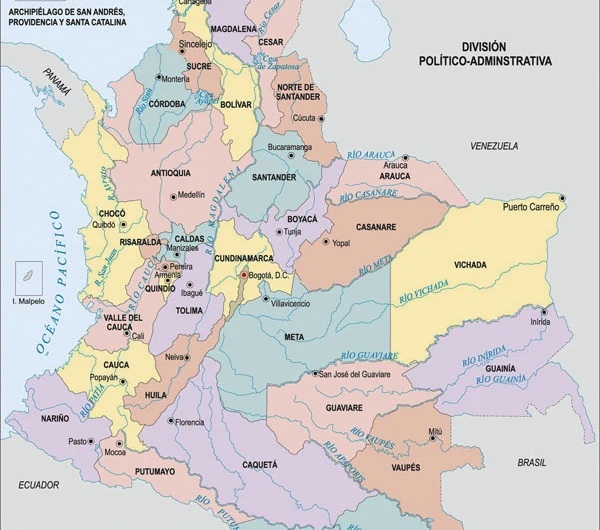
The main Colombian coffee growing regions
“Colombian coffee” spans a huge amount of territory. These regions genuinely differ, and the good stuff is sold by region.
Huila
Now the country’s largest producing department and, for specialty buyers, often the most exciting.
Huila sits in the southwest, in a valley between the Central and Eastern ranges, with high altitudes and a long ripening season. Huila coffees tend to be more complex and fruit-forward than the Colombian stereotype, caramel and chocolate underneath, but with tropical fruit, stone fruit and a bright, structured acidity on top.
If you want to understand why specialty roasters take Colombia seriously, buy a Huila microlot.
Nariño
The far south, on the Ecuadorian border, and geographically remarkable.
Nariño grows coffee at extreme altitudes up to around 2,300 meters (7,500 feet). Which would normally mean frost. It gets away with it because it’s close to the equator and because warm air currents rising from the nearby Patía valley moderate nighttime temperatures.
The result is very slow cherry development, which means dense beans, high sugar concentration and vivid acidity. Nariño coffees are typically sweet, bright and clean, often with citrus and tropical fruit.
Smallholdings here are tiny, and volumes are correspondingly small.
Cauca
Neighboring Nariño, similarly high, similarly bright. Cauca coffees often show citrus acidity, floral aromatics and pronounced sweetness. Popayán, the region’s capital, has a designated origin status of its own.
Tolima
Sitting between Huila and the coffee heartland, Tolima was for decades hard to access due to conflict, and its coffee went largely unrecognized. That’s changed substantially, and Tolima now produces excellent, well-structured coffees. Often at better prices than equivalent Huila lots, since the reputation hasn’t fully caught up.
The Coffee Triangle: Caldas, Quindío and Risaralda
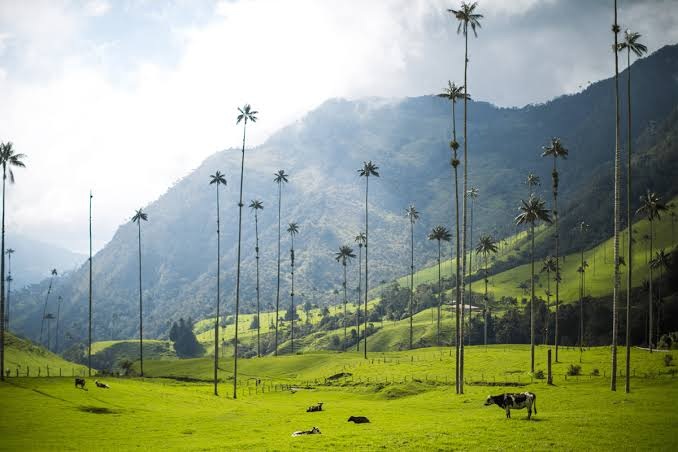
The Eje Cafetero, the traditional heart of Colombian coffee, and the landscape most people picture: steep green slopes, small farms, colorful towns.
The Coffee Cultural Landscape of Colombia here is UNESCO World Heritage listed, recognizing both the farming system and the culture built around it.
Coffee from this region is the classic Colombian profile: balanced, caramel-sweet, chocolatey, medium-bodied, clean. It’s the reference point everything else gets compared to.
Antioquia
The historical center of Colombian coffee expansion, north of the Coffee Triangle, around Medellín. Large producing area, wide altitude range, classic balanced profile with good body.
Santander and Norte de Santander
Among the oldest coffee-growing areas in the country, in the northeast. Generally lower altitude and heavily shade-grown under natural canopy.
The profile is different from the southern regions heavier, chocolatey, nutty, lower in acidity, fuller-bodied. If you find bright acidic coffee unpleasant, Santander is where to look.
Sierra Nevada de Santa Marta
An isolated coastal mountain range in the north, rising steeply from the Caribbean. Coffee here is grown substantially by indigenous communities, often organically and under shade, and much of it is sold with that provenance.
Others worth knowing
Valle del Cauca, Cundinamarca, Casanare and Meta all produce coffee, with the eastern plains regions being a newer frontier as growers adapt to changing conditions.
Varieties and the coffee leaf rust story
This is the most interesting thing happening in Colombian coffee, and almost nobody outside the trade knows about it.
The traditional varieties
Colombia historically grew Typica, then Bourbon, then increasingly Caturra. A compact, high-yielding Bourbon mutation that suited Colombia’s steep terrain and became dominant through the twentieth century.
Caturra has a strong reputation for cup quality. It also has essentially no resistance to disease.
La roya
Coffee leaf rust la roya, is a fungal disease that attacks coffee leaves, defoliates the plant and destroys yields. Around the late 2000s and early 2010s it hit Colombia hard, and production fell sharply.
The Federation’s research center, Cenicafé, had already been working on the problem. It had released a rust-resistant variety called Colombia in the 1980s, and in 2005 released Castillo a rust-resistant variety bred specifically for Colombian conditions, with several regional selections.
What followed was an enormous, coordinated replanting program. A very large share of Colombia’s coffee area was replanted with Castillo and other resistant varieties over roughly a decade. Newer releases like Cenicafé 1 have continued the work, and Tabi offers a rust-resistant option with a reputation for good cup quality.
The Castillo debate
Here’s the interesting part. When Castillo went in, a lot of specialty buyers complained that Colombia had traded flavor for disease resistance. That Caturra cupped better and Castillo was a downgrade.
Subsequent research has substantially complicated that claim, with blind cupping studies finding that well-grown, well-processed Castillo can score comparably to Caturra. The current consensus among many in the trade is that processing and farm practice matter more than the Castillo-versus-Caturra distinction.
Not everyone agrees, and you’ll still find roasters who seek out Caturra specifically. But if you see Castillo on a bag, it isn’t a warning sign.
The broader lesson is worth sitting with: Colombia faced an existential agricultural threat and responded with coordinated national research and replanting. Very few origins could have done that. It’s a direct result of the Federation structure, the same organization behind Juan Valdez.
How Colombian coffee is processed
Colombia is overwhelmingly washed (wet processed), and the traditional method is a large part of the country’s flavor signature.
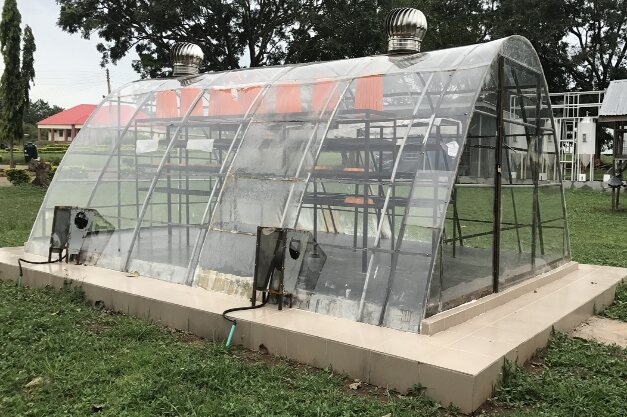
The classic process: cherries are pulped, then fermented in tanks, commonly somewhere in the range of 12 to 24 hours. Its then washed clean, then dried. Because Colombian rainfall makes patio drying unreliable in many regions, much drying happens in marquesinas, parabolic solar dryers that look like small polytunnels.
Crucially, most of this happens on the farm. Unlike Ethiopia or Kenya, where centralized washing stations dominate, the average Colombian smallholder does their own processing. That’s remarkable given the small size of most holdings, and it means processing quality varies farm by farm. Which is precisely why farm-level traceability is worth paying for.
The specialty sector has been experimenting energetically in recent years with naturals, honey processing and anaerobic fermentation. Some of the results are spectacular; some are so intensely fermented they barely read as Colombian at all. Worth trying, but know what you’re buying.
Supremo vs Excelso: the grading myth
If you take one practical thing from this article, make it this.
Supremo and Excelso are screen sizes. They are not quality grades.
Colombian coffee is sorted by bean size:
- Supremo — the largest beans, screen size 17/18 and above
- Excelso — smaller, roughly screen 14 to 16
That’s it. That’s the whole distinction. It describes how big the bean is, not how good it tastes.
Larger beans often correlate with good growing conditions, so there’s a loose relationship. But an Excelso microlot from a careful Huila producer will comfortably outclass a bulk Supremo, and specialty roasters frequently pay more for Excelso lots than Supremo ones.
Supermarket packaging leans on “Supremo” precisely because it sounds like a quality tier. It isn’t. Kenya’s AA grading works the same way, and generates the same confusion.
What actually predicts quality: region, farm or cooperative, altitude, variety, processing method and roast date. Not bean size.
Colombian coffee flavor profile
| Region | Typical flavor notes | Body | Acidity |
|---|---|---|---|
| Coffee Triangle (Caldas, Quindío, Risaralda) | Caramel, milk chocolate, nuts, red apple | Medium | Medium, balanced |
| Antioquia | Chocolate, caramel, nutty, sweet | Medium–full | Medium |
| Huila | Caramel, chocolate, tropical fruit, stone fruit | Medium | Medium–high, structured |
| Nariño | Citrus, tropical fruit, sugarcane sweetness, clean | Light–medium | High, bright |
| Cauca | Citrus, floral, sweet, complex | Light–medium | High |
| Tolima | Caramel, red fruit, balanced, sweet | Medium | Medium–high |
| Santander | Dark chocolate, nuts, low acid, heavy | Full | Low–medium |
| Sierra Nevada | Chocolate, brown sugar, mild fruit | Medium–full | Low–medium |
The general Colombian signature: caramel and chocolate sweetness, medium body, clean washed clarity, and a balanced acidity that’s present without being aggressive. Approachable rather than challenging.
That’s not damning with faint praise. Balance is genuinely difficult, and it’s the reason Colombian coffee works in contexts where more dramatic origins fall apart.
Is Colombian coffee actually the best?
No. And Colombia doesn’t need it to be.
“Best coffee in the world” is a marketing claim, not a meaningful one, and Colombia’s decades of successful advertising have attached it to Colombian beans more firmly than to any other origin. Plenty of people believe it because they’ve been told so since childhood.
What Colombia genuinely is:
- The most consistent major origin. Enormous production, tightly organized, quality-focused, with a national research body behind it.
- The most versatile. It works black, in milk, as filter, as espresso, in blends, at almost any roast level. Very few origins can say that.
- The most available. Year-round harvests mean genuinely fresh Colombian coffee is always somewhere.
- Capable of exceptional coffee. Top Huila, Nariño and Cauca lots compete with anything.
What it isn’t: the most distinctive. If you want a coffee that makes people put down the cup and ask what’s in it, buy an Ethiopian coffee natural. Colombia doesn’t do that, and isn’t trying to.
The honest framing is that Colombia is the origin you can always rely on. Which, on a Tuesday morning, is worth more than a coffee that occasionally astonishes you.
How to buy Colombian coffee
1. Ignore Supremo. As above. It’s a size, not a grade.
2. Look for a region. “Colombia” tells you a little. “Huila” tells you more. “Nariño, 1,950m” tells you a lot.
3. Look for a farm, producer or cooperative name. Given that processing happens on individual farms, farm-level traceability means something specific in Colombia.
4. Check the roast date. Within the last two to four weeks, and give it three to five days off the roaster before brewing.
5. Choose your roast level by use. Colombia takes roasting well across a wide range:
- Light — brings out fruit and acidity, best for bright regions like Nariño and Cauca
- Medium — the sweet spot for most Colombian coffee; caramel, chocolate, balance
- Medium-dark — works genuinely well, unlike with delicate Ethiopians. Good for espresso and milk drinks.
6. Don’t dismiss the supermarket bags entirely — but check the roast date. Mass-market “100% Colombian” is usually real Colombian coffee, just old and roasted for shelf life rather than flavor. The origin isn’t the problem.
7. Decide whether you want experimental processing. An anaerobic natural Colombian is a fascinating coffee. It is not a typical Colombian coffee, and if you’re buying to taste Colombia, buy washed.
How to brew Colombian coffee
Colombia is the most forgiving origin in this guide, which makes it an excellent coffee to learn on.
Filter brewing
- Ratio: 1:16 to 1:17 — 60g per liter, or about 22g to 360ml (0.8oz to 12oz)
- Water: 92–96°C (198–205°F)
- Grind: medium to medium-fine
- Methods: works beautifully in pour-over, AeroPress, batch filter and French press. Unlike delicate Ethiopians, it holds up well in the heavier-bodied methods.
Espresso
Colombia is one of the best single origins for espresso, and a mainstay of espresso blends.
- Ratio: start at 1:2 — 18g in, 36g out
- Time: 25–30 seconds
- Roast: medium to medium-dark works well
The caramel-chocolate sweetness and medium body give crema, structure and forgiveness. Where a light-roasted Ethiopian espresso will punish every small error, Colombia lets you find your feet.
Milk drinks
This is where Colombia earns its keep. Chocolate and caramel notes survive steamed milk; jasmine and bergamot do not. If you drink flat whites, lattes or cappuccinos, a medium-roasted Colombian is a far better use of your money than an expensive Ethiopian that will vanish under the milk.
The pressures facing Colombian coffee
Worth knowing, because it affects what you pay and what’s available.
Climate. Rising temperatures push viable coffee-growing zones higher up the mountains. Rainfall has become less predictable, disrupting flowering and drying. Colombia has more high-altitude land to retreat into than most origins, but the land isn’t infinite.
Farmer economics. Colombian coffee is grown overwhelmingly on very small holdings, and global commodity prices have frequently sat at or below production cost. When a farmer can’t cover costs, quality investment is the first thing to go.
Generational change. The average Colombian coffee farmer is aging, and young people have been leaving coffee for cities and other work. Nobody has fully solved this.
Disease pressure. Rust is controlled, not eliminated, and other threats persist.
None of which means Colombian coffee is in decline — the specialty sector in particular is thriving. But it’s a reminder that the reliable, affordable Colombian coffee most of us take for granted rests on a lot of people doing difficult work for thin margins.
Frequently asked questions
What does Colombian coffee taste like? Typically caramel, milk chocolate and nuts, with medium body and a balanced, clean acidity. Higher-altitude regions like Nariño, Cauca and Huila add citrus, tropical fruit and brighter acidity.
What’s the difference between Supremo and Excelso? Bean size only. Supremo is larger (screen 17/18+), Excelso smaller (screen 14–16). Neither is a quality grade, and excellent coffee is sold as both.
Is Colombian coffee arabica or robusta? Arabica, exclusively. Colombia grows no commercial robusta.
Is Colombian coffee the best in the world? No origin is. Colombia is the most consistent and versatile major origin, and its top regional lots are outstanding, but “best” is a marketing claim, not a measurable one.
Which Colombian region is best? Depends what you want. Huila and Nariño for complexity and brightness; the Coffee Triangle and Antioquia for classic balance; Santander for low-acid, chocolatey, full-bodied coffee.
What does “100% Colombian” mean? That all the coffee in the bag comes from Colombia. It’s a trademark associated with the growers’ Federation. It says nothing about quality, freshness or roast level.
Is Colombian coffee good for espresso? Yes, among the best single origins for it, and a common blend base. The sweetness and medium body give forgiving, well-structured shots.
What is Castillo coffee? A rust-resistant variety developed by Colombia’s national coffee research center and widely planted after the leaf rust crisis. Once controversial among specialty buyers; blind cupping research has largely rehabilitated its reputation.
Why is Colombian coffee available fresh all year? Because growing regions sit at different latitudes and on different sides of three mountain ranges, harvests are staggered, and many regions get a second smaller crop called the mitaca.
Is Colombian coffee strong? It’s balanced rather than strong. Medium body, moderate acidity, low bitterness. If you want a heavy, punchy cup, look to a darker roast or a fuller-bodied origin like Sumatra.
Final thoughts
Colombian coffee suffers from being too familiar. It’s the origin people assume they’ve already understood because they’ve seen the name on a can since childhood.
But the Colombia on a supermarket shelf and the Colombia in a single-farm Nariño lot are separated by an enormous distance altitude, care, processing, freshness and roast. Same country, entirely different experience.
If you’ve written Colombia off as the boring option, buy a Huila or Nariño lot from a specialty roaster, roasted within the last month, medium roast, brewed as pour-over. It won’t taste like the coffee you remember.
And if you want the other end of the argument, put a medium-roasted Colombian through your espresso machine and into steamed milk. It’ll do a job there that almost nothing else does as well.
Colombian coffee is one of many origins worth exploring. For the full picture of where coffee grows and why it tastes different from place to place, see our guide to coffee bean origins.
