
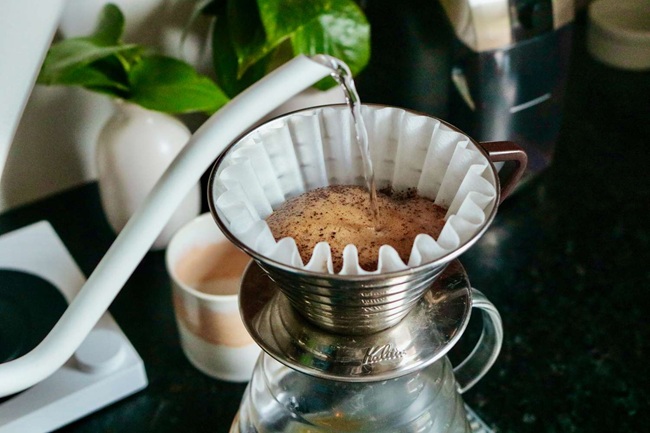

To make pour-over coffee, place a paper filter in a dripper, add medium-ground coffee at a 1:16 ratio, wet the grounds to let them bloom for 30 to 45 seconds, then slowly pour hot water in circles until the brew finishes, about 3 minutes in total. The result is a clean, bright cup that highlights the flavour of the beans.
Pour-over is a manual brewing method where you pour hot water over coffee grounds and let it drip through a filter into your cup. Because the paper filter traps oils and fine particles, pour-over tastes clearer and lighter than a French press. It is one of the best ways to taste what a good coffee actually offers. Here is exactly how to do it.
What you need to make pour-over coffee
Pour-over needs a few specific tools, but none of them are expensive to start with.
- A pour-over dripper. A cone-style dripper such as a V60, a flat-bottomed Kalita Wave, or a Chemex all work. Any of them is a fine first choice.
- Paper filters that match your dripper.
- Fresh coffee beans. Whole beans stay fresher, so grind just before brewing. Our guide to storing coffee beans helps you keep them at their best.
- A burr grinder. An even, medium grind is essential for pour-over. Our roundup of the best burr coffee grinders for home covers options at every budget.
- A gooseneck kettle. The narrow spout gives you the slow, controlled pour that pour-over depends on. A regular kettle can work, but control is harder.
- A kitchen scale. Weighing coffee and water is the fastest route to a repeatable cup.
The best pour-over coffee ratio
The best ratio for pour-over coffee is 1:16, meaning 1 gram of coffee for every 16 grams of water. This gives a balanced, flavour-forward cup. Adjust toward 1:15 for a stronger brew or 1:17 for a lighter one.
| Serving | Water | Coffee (at 1:16) |
|---|---|---|
| 1 cup | 350 ml | 22 g |
| 2 cups | 500 ml | 31 g |
If you want to understand ratios across every brew method, see our full coffee-to-water ratio guide.
How to make pour-over coffee step by step
Follow these six steps for a clean, even brew.
- Boil water and let it settle. Heat water to about 93°C (200°F). Wait roughly 30 seconds after it boils so it does not scorch the grounds.
- Rinse the filter. Put the paper filter in the dripper and pour hot water through it into your cup or carafe. This removes any papery taste and warms your equipment. Tip out the rinse water.
- Add and level the grounds. Grind your coffee to a medium texture, similar to table salt, add it to the filter, and give the dripper a gentle shake so the bed is level.
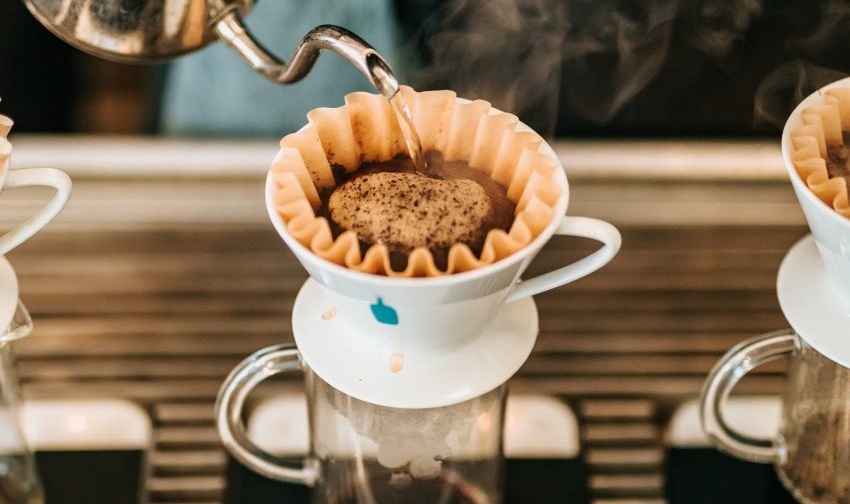
- Bloom the coffee. Start your timer and pour just enough water to wet all the grounds, about twice their weight. Wait 30 to 45 seconds. You will see the coffee puff up as it releases gas, which improves the flavour.
- Pour in slow circles. Pour the rest of the water in steady spirals, moving from the centre outward and back, keeping the water level below the rim. Aim to add all the water within the first minute or so.
- Let it finish and serve. The water should fully drip through by around the 3-minute mark. If the bed looks flat and even, you nailed it. Give it a swirl and enjoy.
Common pour-over mistakes to avoid
Small errors are easy to fix once you know them.
- Grinding too coarse or too fine. Too coarse and the water rushes through, leaving a weak, sour cup. Too fine and it drains slowly and turns bitter. Aim for a medium grind.
- Pouring too fast. A quick, heavy pour digs channels in the coffee bed and brews unevenly. Pour slowly and steadily.
- Skipping the bloom. The bloom lets trapped gas escape so water can reach the coffee properly. Do not rush past it.
- Using boiling water. Water straight off the boil can scorch the grounds. Let it rest for 30 seconds first.
If your cup still tastes harsh, our guide on why your coffee tastes bitter covers the fixes.
Pour-over vs French press
Both pour-over and French press make excellent coffee, but they taste different. Pour-over uses a paper filter, which traps oils and fine particles for a cleaner, brighter, more delicate cup. French press uses a metal mesh, which lets oils through for a heavier, fuller body.
If you like a light, tea-like clarity, start with pour-over. If you prefer a rich, robust mug, try our guide on how to make French press coffee.
Frequently asked questions
What grind size is best for pour-over coffee? A medium grind, similar to table salt, is best for most pour-over drippers. If your coffee drains too fast and tastes weak, grind finer. If it drains too slowly and tastes bitter, grind coarser.
How long should pour-over coffee take to brew? A single cup of pour-over should finish in about 3 minutes, including a 30 to 45 second bloom. Larger brewers like the Chemex take longer, often 4 to 5 minutes.
Do I need a gooseneck kettle for pour-over? No, but it helps a lot. The narrow spout gives you the slow, precise pour that makes pour-over consistent. A regular kettle works if you pour carefully and gently.
Why do you rinse the paper filter first? Rinsing removes any papery taste from the filter and warms the dripper and cup, which keeps your brewing temperature stable. It only takes a few seconds and improves the final cup.
Is pour-over coffee stronger than drip coffee? Pour-over and automatic drip use the same basic method, so strength depends mostly on your ratio. Pour-over gives you more control over the pour and timing, which often produces a cleaner, more flavourful result.
Next steps
Now that you can brew a clean cup, dial in your strength with our coffee-to-water ratio guide, and if you have not upgraded your grinder yet, start with the best burr coffee grinders for home. A good grind makes the biggest difference of all.
