
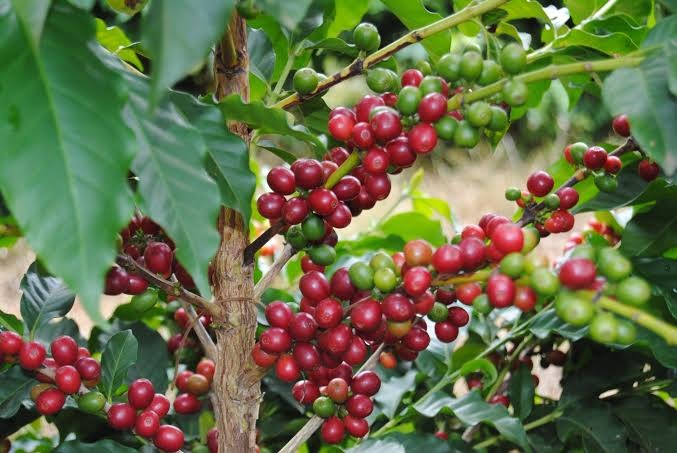

There’s a specific moment that happens to a lot of people the first time they drink a good Ethiopian coffee. They take a sip. They pause. Then they look at the cup slightly suspiciously and ask whether something’s been added to it. Nothing has. That’s just what it tastes like.
Ethiopian coffee can taste like jasmine, lemon peel, Earl Grey tea, peach, apricot, or with certain processing. Just like someone stirred strawberry jam into the pot. It routinely doesn’t taste like what most people mean when they say “coffee,” and that’s precisely the point.
If you’ve only ever drunk medium-to-dark roasted blends, a well-made Ethiopian is the single bag most likely to change your mind about what coffee is capable of. This guide covers where it comes from, why it tastes that way, how to choose a bag, and importantly how to avoid wasting your money on one.
Why Ethiopian coffee tastes unlike anything else
The short answer is genetics. Ethiopia is the birthplace of Coffea arabica. The plant still grows wild in the forests of the southwest, and every arabica coffee grown anywhere else on earth descends from a very small number of seeds that left this region centuries ago.
That matters more than it sounds. Most of the world’s commercial coffee comes from a startlingly narrow genetic base. A handful of founding plants, propagated globally. Ethiopia kept the rest of the library.
Estimates of how many distinct coffee varieties exist in Ethiopia range into the thousands, and a large proportion have never been formally catalogued. What that means in the cup is a range of aromatic possibility that simply doesn’t exist elsewhere. Panama can grow Geisha because Geisha came from Ethiopia. Kenya’s celebrated SL-28 traces back to the same source. Ethiopia has all of it, plus everything nobody’s named yet.
Add high altitude, cool nights and a long ripening season, and you get coffee that’s dense, complex and aromatic in a way that other origins can approach but rarely match.
What does “heirloom” actually mean on an Ethiopian coffee bag?
You’ll see the variety listed as “heirloom” on almost every bag of Ethiopian coffee, and it’s worth understanding what that word is doing.
On a Colombian bag, “Caturra” means something specific. A known, named cultivar with documented characteristics. On an Ethiopian bag, “heirloom” means roughly: a mix of local landrace varieties native to this area, which nobody has fully identified.
It is not a red flag. It is not vagueness or evasion. It’s an honest admission that a single Ethiopian farm might contain dozens of genetically distinct plants that have grown there for generations, and no one has done the DNA work.
Some named selections do exist. Ethiopian agricultural research has released a number of improved varieties over the decades, and you’ll occasionally see numbered designations on more traceable lots. But for most Ethiopian coffee, “heirloom” is the accurate answer.
Think of it less like a grape variety and more like a wildflower meadow.
The main Ethiopian coffee growing regions
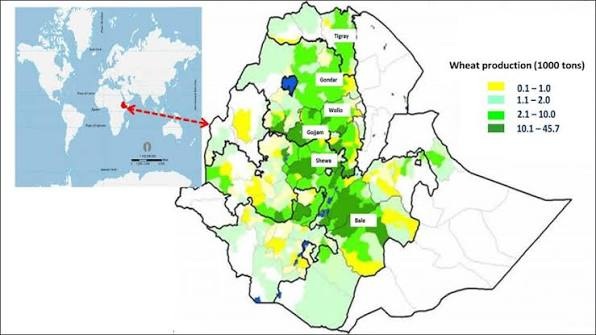
“Ethiopian coffee” covers an enormous amount of ground. These regions genuinely taste different from one another, and the region name is the single most useful thing on the bag after the roast date.
Yirgacheffe
The famous one, and deservedly so.
Yirgacheffe is a district within the Gedeo zone in southern Ethiopia, sitting high. Commonly 1,700 to 2,200 meters (5,600 to 7,200 feet), with cool temperatures and good rainfall. Confusingly, coffee from here was historically graded and sold under the broader “Sidamo” umbrella, which is why older references sometimes muddle the two.
Washed Yirgacheffe is the reference point for what people mean by “Ethiopian coffee.” It’s intensely floral, with jasmine and bergamot aromatics that genuinely do resemble Earl Grey, plus bright lemon and citrus acidity and a light, tea-like body.
Neighboring districts, Kochere, Wenago and Gedeb. All produce coffee of similar character and often appear on bags in their own right. Gedeb in particular has a strong reputation.
Look for: washed, light roast, if you want the classic floral experience.
Sidama (Sidamo)
Sidama is the larger region surrounding Yirgacheffe, and it’s big enough that generalizing is genuinely difficult.
You’ll find everything here, delicate florals, heavy berry naturals, citrus-forward washed lots, and plenty in between. Altitude ranges widely, and so does quality. Sidama coffees are often excellent value precisely because they don’t carry the Yirgacheffe name premium.
Both spellings appear on bags. “Sidamo” is the older grading term; “Sidama” is the region.
Look for: a more specific sub-region or washing station name if you can find one.
Guji
Guji has, over the last decade or so, gone from being folded into Sidamo lots to being sought out on its own. It’s now some of the most exciting coffee in Ethiopia.
Guji coffees tend to be vivid and fruit-forward. Washed lots are clean and floral with stone fruit; naturals can be extraordinary. With intense berry, tropical fruit, sometimes almost syrupy sweetness. Sub-areas like Hambela and Uraga appear on specialty bags.
Look for: natural process Guji if you want to understand what all the fuss is about. Be warned that it may ruin regular coffee for you.
Harrar (Harar)
The eastern outlier, and completely different in character.
Harrar sits in the eastern highlands, in a drier climate, and its coffee is traditionally natural processed, dried whole in the cherry. The result is bold, winey, and famously blueberry-like, with a heavier body than the southern coffees and less of the floral delicacy.
Harrar is more variable than the southern regions, and quality control has historically been less consistent. When it’s good, it’s unforgettable.
Look for: natural process. Harrar washed is unusual and rather misses the point.
Limu, Jimma and the southwest
Limu produces balanced, wine-like washed coffees with good sweetness, approachable and underrated.
Jimma (sometimes Djimmah) is a large producing area in the southwest, historically associated with commodity-grade coffee, though specialty lots absolutely exist.
Kaffa, Bench Maji, Illubabor and Sheka are where wild and semi-wild forest coffee still grows. The name “Kaffa” is one candidate origin for the word “coffee” itself. Coffee from these areas rarely reaches specialty markets in volume, but it’s the closest thing to drinking coffee as it existed before anyone farmed it.
Washed vs natural: the biggest variable of all
Here’s the thing that trips up most people buying Ethiopian coffee: processing method matters more than region.
A washed Guji and a natural Guji, from the same farm in the same harvest, will taste less like each other than a washed Guji and a washed Yirgacheffe. If you buy on region alone, you’re using the wrong lever.
Washed (wet processed)
The fruit is removed from the seed before drying. This strips away the fruity fermentation character and lets the underlying coffee show through, which, in Ethiopia, means florals and citrus.
Tastes like: jasmine, bergamot, lemon, lime, white peach, black tea. Clean, delicate, bright, light-bodied.
Choose this if: you want elegance, clarity and that famous tea-like quality. This is classic Ethiopian coffee.
Natural (dry processed)
The whole cherry is dried intact, with the seed inside, so the fruit sugars and fermentation influence the seed directly.
Tastes like: blueberry, strawberry, tropical fruit, red wine. Heavier, sweeter, jammier, sometimes almost boozy.
Choose this if: you want intensity and fruit, or you’re trying to convince a skeptic that coffee can taste surprising.
Naturals are also more variable. Done well, they’re spectacular. Done badly, they taste of over-fermentation . A sour, funky, slightly rotten note. Buying from a roaster you trust matters more with naturals than with anything else.
You’ll occasionally see anaerobic or experimental Ethiopian lots, where fermentation happens in sealed tanks. These push intensity even further and are worth trying once, though they’re divisive and expensive.
Ethiopian coffee flavor profile at a glance
| Region | Typical processing | Common flavor notes | Body | Acidity |
|---|---|---|---|---|
| Yirgacheffe | Washed | Jasmine, bergamot, lemon, peach, black tea | Light | High, citric |
| Yirgacheffe | Natural | Strawberry, blueberry, floral, sweet | Medium | High, fruity |
| Sidama | Both | Citrus, berry, floral, chocolate in darker lots | Light–medium | Medium–high |
| Guji | Washed | Stone fruit, floral, tropical, clean | Light–medium | High |
| Guji | Natural | Berry, mango, syrupy, intense | Medium–full | High, fruity |
| Harrar | Natural | Blueberry, wine, spice, dried fruit | Full | Medium |
| Limu | Washed | Balanced, wine-like, sweet, citrus | Medium | Medium |
As with all origin generalizations, these are tendencies rather than promises. Roast level can override every row in this table — more on that shortly.
How Ethiopian coffee is grown

Ethiopian coffee production looks very little like a Brazilian or Colombian farm, and understanding why explains a lot about the coffee.
Garden coffee accounts for the majority of production. These are small plots , often well under a hectare. All around family homes, with coffee growing among food crops, fruit trees and shade. It’s less a plantation than a diversified smallholding that happens to include coffee.
Forest and semi-forest coffee is exactly what it sounds like: coffee growing wild or semi-managed under natural forest canopy in the southwest. Yields are low; genetic diversity is extraordinary.
Plantation coffee is organized estates, dexists but represents a minority of output.
Two consequences worth knowing. First, Ethiopian coffee is overwhelmingly a smallholder product, which means a huge number of families depend on it and individual lots are often aggregated from many farms. Second, much of it is grown under shade with minimal chemical input almost by default. Though formal organic certification is expensive and many farms that would qualify aren’t certified.
Harvest generally runs from around October through January, which means freshly-harvested Ethiopian coffee typically reaches roasters in consuming countries in the first half of the following year. If you want the best of it, that’s roughly when to look.
Understanding Ethiopian grading and bag labels
Ethiopian coffee is graded on a numbered scale based primarily on defect count, with Grade 1 being the cleanest. Specialty coffee is generally Grade 1 or 2.
The grade tells you about physical defects, not about flavor. A Grade 1 coffee has been well sorted; it hasn’t necessarily been well grown.
More useful than the grade:
- Region and sub-region — “Gedeb, Yirgacheffe” beats “Ethiopia”
- Washing station or cooperative — a strong traceability signal in a country where most coffee comes from many small farms
- Processing method — as covered above, the biggest lever
- Altitude — commonly 1,700–2,200m for specialty lots
- Roast date — always, on any coffee
For years, Ethiopia’s commodity exchange system anonymized lots for sale, which made farm-level traceability very difficult and frustrated specialty buyers. Reforms have progressively opened up more direct trade, and traceable single-station lots are now much more common than they used to be. If you’re seeing a named washing station on the bag, that’s the result of that shift.
The Ethiopian coffee ceremony
You can’t write about Ethiopian coffee honestly without mentioning that Ethiopia isn’t just a producer — it’s one of the world’s great coffee-drinking cultures.
An unusually large share of Ethiopia’s crop is consumed domestically, which is rare among producing nations, where coffee is often purely an export commodity.
The coffee ceremony is central to Ethiopian social life. Green beans are roasted in a pan over coals in front of guests, ground by hand, and brewed in a clay pot called a jebena. The coffee is served in three successive rounds. Traditionally called abol, tona and baraka, each progressively weaker, and leaving before the third round is considered impolite. Incense burns. Popcorn or roasted grain is often served alongside.
It can take hours. That’s the point: it’s a ritual of hospitality, not a caffeine delivery system. It’s also a useful corrective for anyone who thinks careful attention to coffee is a recent invention of Western specialty cafés.
How to buy Ethiopian coffee
A practical checklist.
1. Buy light to medium roast. This is not negotiable.
Everything that makes Ethiopian coffee worth the money the florals, the citrus, the tea-like delicacy. Are destroyed by dark roasting. A dark-roasted Yirgacheffe tastes like a dark roast. You have paid a premium for jasmine and received carbon.
If a bag says “Ethiopian” and looks oily and near-black, put it down. You’re better off with a cheaper coffee that suits that roast level.
2. Check the roast date.
Aim for coffee roasted within the last two to four weeks. Give it at least three to five days off the roaster before brewing . Very fresh coffee is still degassing and brews unevenly. “Best before” dates tell you nothing.
3. Decide washed or natural before you decide region.
Washed for florals and clarity. Natural for fruit and intensity. This choice affects your cup more than choosing between Yirgacheffe and Guji.
4. Look for specificity.
A named washing station, sub-region and altitude means someone tracked this coffee. “Ethiopian Blend” from an unnamed source usually means the opposite.
5. Don’t be put off by “heirloom.”
As covered above, that’s the correct answer for most Ethiopian coffee, not a gap in the information.
6. Buy whole bean.
This applies to all coffee but especially here. The aromatics you’re paying for are the first thing lost after grinding.
7. Buy small and often.
250g (about 9oz) at a time. Ethiopian coffee is at its best fresh, and there’s little point buying a kilo that’ll be tired by the time you reach the bottom.
How to brew Ethiopian coffee
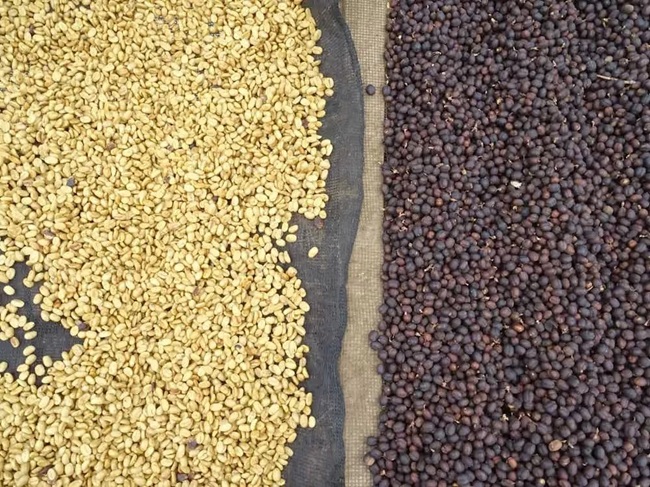
Ethiopian coffee rewards filter brewing and gentle handling. It’s delicate; treat it that way.
Best methods
Pour-over (V60, Kalita, Chemex) — the best match by a clear margin. Paper filtration gives the clarity that lets florals and citrus come through.
AeroPress — excellent, and forgiving. Good for naturals in particular.
Batch filter / drip — works well if your machine brews hot enough.
French press — decent, though the heavier body and passed-through oils blunt some of the delicacy. Use a coarser grind and consider decanting promptly.
Starting parameters
- Ratio: 1:16 to 1:17 — so 60g coffee per liter of water, or roughly 22g coffee to 360ml (0.8oz to 12oz)
- Water temperature: 93–96°C (200–205°F). Ethiopian coffee is often high-grown and dense, so it tolerates the hotter end of that range better than you’d expect
- Grind: medium-fine for pour-over. If the cup tastes thin and sour, grind finer. If it tastes drying or bitter, grind coarser
- Water: filtered, low in chlorine. This matters more with delicate coffees than robust ones
Where Ethiopian coffee struggles
Milk drinks. Almost all of what makes an Ethiopian coffee special disappears under steamed milk. A floral washed Yirgacheffe in a latte is money burned. If you drink milk coffee, buy a chocolatey Brazilian or a blend and save the Ethiopian for black.
Espresso. Not impossible — natural Ethiopians in particular can make remarkable, wildly fruity shots but it’s difficult, unforgiving, and light-roasted Ethiopian espresso is notoriously hard to dial in. Fun to experiment with; not where a beginner should start.
Anyone wanting “strong” coffee. Ethiopian coffee is intense in flavor, not in the heavy, roasty, bitter way people often mean by strong. If someone wants a punchy dark cup, this will disappoint them and it isn’t the coffee’s fault.
Common mistakes with Ethiopian coffee
- Buying it dark roasted. The most expensive mistake, and the most common.
- Brewing it like a dark roast — grind too fine, water too cool, ratio too strong.
- Putting it in milk.
- Expecting every Ethiopian to taste like blueberries. That’s specifically natural processing. Washed coffee doesn’t do that.
- Judging a natural harshly for tasting fermented — some funk is inherent to the style, though genuinely over-fermented coffee is a defect.
- Buying stale. A six-month-old Ethiopian is just an expensive ordinary coffee.
Frequently asked questions
What does Ethiopian coffee taste like? Washed Ethiopian coffee is floral and citrusy jasmine, bergamot, lemon, peach. With a light, tea-like body and bright acidity. Natural Ethiopian coffee is fruitier and heavier, with blueberry, strawberry and wine-like notes. Both are markedly more aromatic than most other origins.
What’s the difference between Yirgacheffe and Sidamo? Yirgacheffe is a specific district within the broader southern growing area; Sidama (Sidamo) is the larger surrounding region. Yirgacheffe is more consistently floral and delicate; Sidama covers a much wider range of styles and often offers better value.
Is Ethiopian coffee strong? Not in the sense most people mean. It’s intensely flavored but typically light-bodied with high acidity and relatively low bitterness. If you want heavy, roasty and bold, this isn’t it.
Why is Ethiopian coffee so expensive? High altitude, hand-picking on small plots, low yields, careful processing and strong specialty demand. It’s usually mid-to-upper range for specialty coffee, well short of Panama Geisha territory.
What does “heirloom” mean on the bag? A mix of native Ethiopian landrace varieties that haven’t been individually identified. Normal and accurate for Ethiopian coffee, not a warning sign.
Is Ethiopian coffee arabica or robusta? Arabica, exclusively. Ethiopia is arabica’s genetic homeland and doesn’t produce robusta commercially.
What’s the best way to brew Ethiopian coffee? Pour-over, with a paper filter, light-to-medium roast, 1:16 ratio, water at 93–96°C (200–205°F). Drink it black.
Does Ethiopian coffee have more caffeine? No. Caffeine content is driven mainly by species, arabica versus robusta and by dose, not by origin. Being arabica, Ethiopian coffee sits at the lower end.
Can I use Ethiopian coffee for espresso? You can, and natural Ethiopians make spectacular, fruit-bomb shots. But light-roasted Ethiopian espresso is genuinely difficult to dial in. Not a beginner project.
What is kopi luwak? Is Ethiopian coffee similar? No connection. Kopi luwak is an Indonesian novelty product with significant animal welfare problems and no established quality advantage. Ethiopian coffee’s reputation rests on genetics, altitude and processing.
Final thoughts
Ethiopian coffee is where the whole thing started, and it’s still the origin that best demonstrates how much range coffee actually has.
If you’re going to try one bag, make it a washed Yirgacheffe or Guji, light roasted, roasted within the last month, brewed as pour-over and drunk black. That’s the clearest possible introduction to what this coffee does.
If that lands, buy a natural Guji next and taste them side by side. Two bags from the same country, weeks apart in the same brewer, tasting almost nothing alike that comparison teaches more about coffee than any amount of reading.
Including this article.
Ethiopian coffee is one of many origins worth exploring. For the full picture of where coffee grows and why it tastes different from place to place, see our guide to coffee bean origins.
